AI Writer for SaaS Blogs - Plan and Scale Product-Led Content (2026)
SaaS blogs succeed when content connects real problems to the product. AI writers speed up production, but product knowledge still comes from you.
Use AI for the volume SaaS content needs: problem guides, how-tos, comparisons and integration pages. Feed it accurate product details, keep a human expert in the review loop, and prioritise content close to signups. Koala suits SaaS teams that want SERP-based drafts, Brand DNA product context and publishing to WordPress, Webflow or Ghost.
What Makes SaaS Content Different
SaaS buyers research carefully. They compare tools, read tutorials and look for proof that a product solves their specific problem. Content that ranks but never mentions the product does little for growth.
The best SaaS blogs are product-led: they explain problems genuinely well and show where the product fits, without turning every post into a sales pitch.
Content Types That Drive Signups
| Stage | Content type | Example | AI fit |
|---|---|---|---|
| Bottom | Comparisons and alternatives | [Your tool] vs [competitor] | Good draft, needs careful fact-checking |
| Bottom | Integration pages | How to connect [tool] with Slack | Good with accurate product details |
| Middle | Use-case guides | How agencies manage client reporting | Strong |
| Middle | Feature tutorials | How to automate invoice reminders | Good with screenshots added |
| Top | Problem explainers | Why do projects go over budget? | Strong |
| Top | Templates and checklists | Client onboarding checklist | Strong |
Most SaaS teams get better returns starting at the bottom of the funnel, then building outward.
Giving the AI Your Product Knowledge
An AI writer doesn't know your product unless you tell it. Generic drafts will describe features you don't have or miss the ones that matter.
- Load your product into Brand DNA: features, plans, audiences, positioning and voice.
- Add Article Instructions for each piece, such as which feature to highlight.
- Set the promotion level: light for top-of-funnel, stronger for comparisons.
- Use Deep Research for competitor details on comparison pages.
- Have a product expert review every bottom-of-funnel page.
Load your product into Koala's Brand DNA on the free plan and draft a product-led guide.
Try Koala FreeComparison Pages: Handle With Care
Comparison and alternative pages often convert best, but they carry the most risk. Competitor pricing and features change, and inaccurate claims damage credibility with exactly the buyers you want.
- Verify every competitor fact against their current website.
- Be fair about where competitors are stronger.
- Date-check pages every quarter.
- Avoid claims you can't support, like "the fastest" or "the cheapest".
Adding What AI Can't

Screenshots
Show the product doing the job described.
Customer Examples
Real, permitted stories about how customers use features.
Expert Opinion
Product managers or founders explaining the "why".
Original Data
Anonymised usage insights only your company has.
These additions are what separate a SaaS blog people trust from another generic AI blog. Our guide to E-E-A-T and AI content explains why they matter.
Scaling Without Losing Quality
SaaS teams often want to go from four posts a month to twenty. AI makes that possible, but the review bottleneck moves to product experts. A few practices help.
- Batch by cluster so reviewers stay in one topic.
- Separate review levels: light edits for top-of-funnel, expert review for bottom-of-funnel.
- Keep a style and facts sheet with approved claims and terminology.
- Refresh, don't just publish: update older posts as the product changes.
Example Content Plan for a Project Management SaaS
Here's how a fictional project management tool might plan its first quarter of AI-assisted content, starting near signups and working outward.
| Month | Focus | Example pages |
|---|---|---|
| Month 1 | Comparisons and alternatives | [Tool] vs two main competitors, best alternatives to the market leader |
| Month 2 | Use cases and integrations | Project management for agencies, connecting with Slack and Google Drive |
| Month 3 | Problem explainers and templates | Why projects run late, a project kickoff checklist |
Every top-of-funnel post links to a relevant use-case page, and every use-case page links to the comparison or signup page. That structure means traffic from broad searches has a path toward the product. Our topical authority guide explains why clustering content this way helps rankings too.
Writing Feature Tutorials With AI
Feature tutorials are some of the most useful SaaS content, because they help both prospects and existing customers. They're also easy to get wrong if the AI guesses at your interface.
- Write the steps yourself as a rough list, in the order a user clicks.
- Ask the AI to expand them into a clear tutorial with context and tips.
- Add screenshots for each key step.
- Test the tutorial by following it in the product.
- Link it from the relevant feature page and help docs.
This keeps the facts in your hands and uses AI for what it's good at: turning a rough list into readable, well-structured guidance.
Which Koala Plan Fits a SaaS Team?
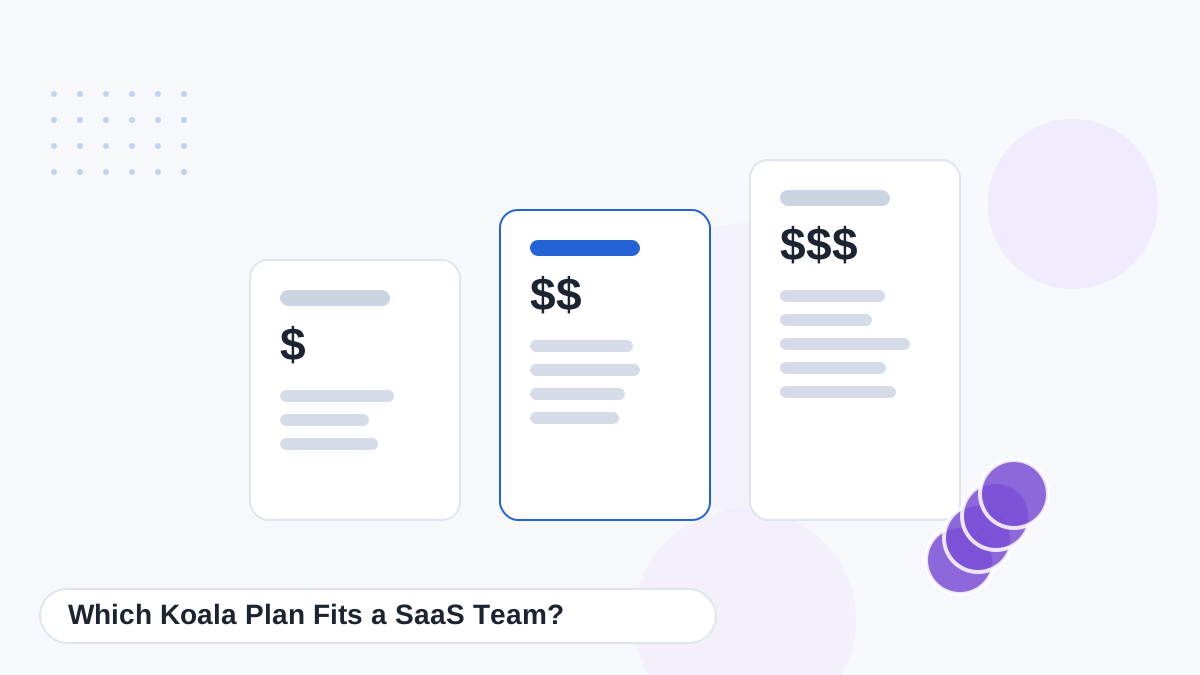
Professional at $49 a month suits most SaaS blogs, with 100,000 words, Deep Research for comparison pages, the Article Editor and the Search Console dashboard. Teams publishing heavily or running Autopilot for top-of-funnel content may prefer Boost at $99. See Koala pricing for every tier.
Measuring SaaS Content
Track signups and trials from content, not just traffic. Tag CTAs, use analytics goals, and look at which posts appear in the path before conversion. A comparison page with modest traffic can matter more than a viral top-of-funnel post.
Common SaaS Content Mistakes With AI
- Describing features you don't have because the AI filled a gap. Always check against the product.
- Top-of-funnel posts with no path to the product, so traffic never turns into trials.
- Comparison pages that never get updated after competitors change pricing.
- Identical structure across every post, which makes the blog feel generated.
- No screenshots or examples, leaving readers unsure how the product actually works.
Each of these is easy to fix with a short review checklist. The teams that get the most from AI writers treat drafts as raw material and keep product experts responsible for accuracy. That combination gives you the speed of AI with the credibility buyers expect before they sign up.
Repurposing SaaS Content

A strong blog post can become several other assets. A use-case guide can turn into an email nurture sequence, a webinar outline, a sales one-pager or a set of social posts. AI handles these conversions quickly, and your team only needs to check tone and accuracy for each channel.
Repurposing gets more value from every reviewed article, which matters when product experts' review time is the real bottleneck. Start with your best-performing posts, since they've already proven their topic resonates with buyers.
Track which repurposed formats actually drive trials or demos, and double down on those. For many SaaS teams, a well-built email sequence based on a top blog post converts better than the post itself, because it reaches readers repeatedly over several days instead of once.
Turn Product Knowledge Into Content at Scale
Start on Koala's free plan, set up Brand DNA with your product, and draft a comparison or use-case guide this week.
Try Koala Free