How to Write Product Reviews With AI - Credible Reviews That Help Buyers Decide (2026)
Product reviews are some of the most valuable pages an affiliate site can publish, and the easiest to get wrong with AI. Credibility is everything.
Google's reviews system rewards in-depth reviews over thin summaries. Use AI to research, structure and draft, then add what makes a review trustworthy: specific details, clear comparisons, honest pros and cons, and a verdict for specific buyers. Show real evidence where you have it, and never invent testing, ratings or results.
What Google Looks for in Reviews
Google's reviews system evaluates articles and pages that recommend, give opinions on or analyse products, services and other things. Google says it aims to show reviews with in-depth research rather than thin content that simply summarises a list of products.
Its published guidance on writing high-quality reviews includes practices such as:
- Evaluating from the user's perspective.
- Demonstrating knowledge of what you're reviewing.
- Providing evidence, such as visuals or measurements, where you can.
- Sharing quantitative measurements of performance where relevant.
- Explaining what sets a product apart from competitors.
- Covering comparable products or explaining which is best for certain uses.
- Discussing benefits and drawbacks based on research.
- Describing how a product has evolved from previous versions.
- Including links to more than one seller where practical.
Google also notes that review quality and originality matter more than length.
Where AI Helps and Where It Doesn't

| Task | AI role | Your role |
|---|---|---|
| Gathering specs and features | Summarise from listings and official pages | Verify against the manufacturer |
| Structuring the review | Draft headings and sections | Adjust to what buyers need |
| Comparisons | Draft side-by-side tables | Check facts, add judgment |
| Pros and cons | Suggest from research | Confirm and prioritise |
| Evidence | Cannot create real evidence | Add genuine photos or data you have |
| Verdict | Draft options | Make the call for specific buyers |
The Golden Rule: Never Fake It
The fastest way to destroy a review site's credibility is invented experience. Don't claim you tested, used or bought something if you didn't. Don't invent star ratings, scores, measurements or customer quotes. Don't use other people's photos as if they were yours.
A research-based review can still be genuinely helpful. Explain what the product offers, who it suits, how it compares and what its limitations are, based on verified information. If you do have real experience or measurements, include them, because that evidence is valuable.
A Strong Review Structure
- Quick verdict: who it's for and who should skip it, in a few sentences.
- Key specs: a scannable table of verified details.
- What stands out: features that set it apart, with why they matter.
- Limitations: honest drawbacks and who they affect.
- Price and value: current pricing context without invented deals.
- Comparisons: how it stacks up against close alternatives.
- Who should buy it: specific buyer scenarios.
- FAQs: common questions from buyers.
- Final verdict: a clear recommendation and next step.
Writing a Review Step by Step With AI
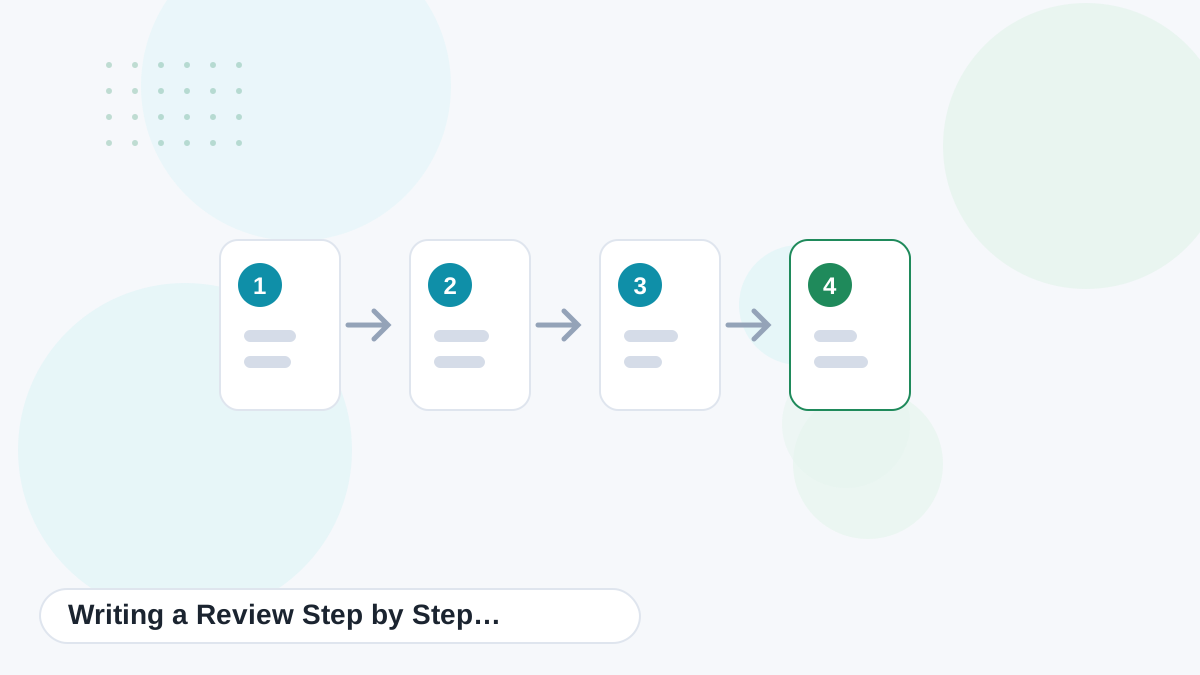
1. Research First
Collect verified specs, current prices, official feature lists and common buyer questions. Note competitors buyers often consider. Koala's Deep Research can gather context before drafting.
2. Brief the AI
Give the AI the product, audience, verified facts and the comparisons you want. Tell it explicitly not to claim testing or invent ratings.
3. Generate and Review the Outline
Check that the structure covers what buyers need. Remove generic sections that don't help a decision.
4. Draft and Edit
Generate the full review, then edit for accuracy, specificity and a clear point of view. Replace vague praise with concrete detail.
5. Add Evidence and Links
Add your own photos or data if you have them, link to the relevant comparison and roundup pages, and link to sellers where appropriate.
Koala's review and roundup formats are built for affiliate content. Try a draft on the free plan.
Try Koala FreeTurning Vague Copy Into Useful Detail
| Vague | Useful |
|---|---|
| "This grinder is great for espresso." | "Its fine adjustment steps make it easier to dial in espresso than grinders with only a few preset settings." |
| "It's a bit loud." | "Grinders of this motor type tend to be louder; if you make coffee while others sleep, consider a quieter model." |
| "Good value for money." | "At its current price, it sits between budget and premium models, and it's the cheapest option here with fine adjustment." |
Pros and Cons That Help
Good pros and cons are specific and tied to buyer needs. "Compact footprint, ideal for small kitchens" beats "small". "No timer, so you'll dose by eye" beats "lacks features". Prioritise the points that would change someone's decision.
Multi-Product Roundups
Google's guidance also applies to ranked lists. For "best X" pages, explain why each product earns its place, who it's best for, and how it compares with the others. Clear "best for" labels help readers navigate. Koala's Amazon roundup format pulls in product data and adds your Associates tag; see Koala Amazon roundups.
Keeping Reviews Current
Prices change, new models launch and features get updated. Review money pages every few months, update pricing context, and note when newer versions replace older ones. Outdated reviews lose both rankings and reader trust.
Common Review Mistakes With AI
- Spec-sheet rewrites: listing features without explaining why they matter.
- No real verdict: "it depends" without saying on what.
- Only positives: reviews with no drawbacks look like ads.
- Invented details: made-up measurements, test results or customer quotes.
- Outdated pricing: stale numbers that mislead buyers.
- Missing comparisons: no help choosing between close options.
Each of these makes a review less useful and less trustworthy. Fixing them is usually a matter of editing, not rewriting from scratch.
Disclosures and Affiliate Links
If you earn commission from links in a review, disclose it clearly. Many sites put a short disclosure in the footer or near the top of the page. Rules and expectations vary by country, so check what applies where you publish. Clear disclosure supports trust, which is what makes reviews convert in the first place.
A Pre-Publish Review Checklist
- Are all specs, prices and features verified against official sources?
- Does the verdict name specific buyers who should and shouldn't choose the product?
- Are there honest drawbacks, explained in terms of who they affect?
- Does the review compare at least one or two close alternatives?
- Is every claim of experience or measurement genuine?
- Are affiliate links disclosed and working?
Running through this list takes a few minutes per review and catches most of the problems that make AI-assisted reviews feel thin. Over time, the same checks can go straight into your Article Instructions so drafts arrive closer to publish-ready.
That small habit compounds across a whole review section of a site.
Draft Credible Reviews Faster
Use Koala's free plan to generate a research-based review draft, then add your verdict, verified details and any real evidence you have.
Try Koala Free