Humanize AI Content - How to Edit AI Drafts Until They Sound Like You (2026)
Humanising AI content isn't about tricking detectors. It's about editing drafts until they're specific, useful and sound like a real publisher with a point of view.
The fastest way to humanise AI content is to cut filler, replace generic statements with specifics, add your own examples and opinions, and adjust the tone to your brand. Vary sentence length, remove stiff transitions and check every fact. These edits improve readability for people, which is what actually matters for rankings and conversions.
What "Humanising" Really Means
AI drafts often share recognisable patterns: long introductions, safe generalisations, formal transitions, repeated ideas and a polished but impersonal tone. Humanising means editing those patterns out and adding what only a real publisher can supply.
The goal isn't to hide AI use. It's to make the content good enough that how it was drafted doesn't matter.
The Common AI Patterns to Fix
| Pattern | Example | Fix |
|---|---|---|
| Slow openings | "In today's fast-paced digital landscape…" | Start with the answer |
| Stiff transitions | "Moreover," "Furthermore," "Additionally," | Use natural links or none at all |
| Vague claims | "This tool offers many benefits." | Name the specific benefit and who it helps |
| Excess hedging | "It may potentially be somewhat helpful…" | Commit to a clear statement |
| Repetition | The same point in three sections | Say it once, in the right place |
| Empty conclusions | "In conclusion, X is important." | End with a recommendation or next step |
Step 1: Cut the Filler
Start by deleting. Remove throat-clearing introductions, sentences that restate the heading, and paragraphs that repeat earlier points. Most AI drafts get noticeably better from this step alone.
A useful test: if a sentence could appear in any article on any topic, it probably isn't adding anything.
Step 2: Replace Generic Statements With Specifics
Specifics are what make writing feel real. Swap vague claims for concrete details: numbers you've verified, named features, realistic scenarios and clear constraints.
Before
"Pricing is affordable for most users."
After
"Starter costs $25 a month, which covers about 30 standard articles."
Step 3: Add Your Own Perspective
AI summarises what already exists. Your opinion, recommendation and reasoning are what readers can't get elsewhere. Add clear judgments, such as "we'd start with the cheaper plan if you publish fewer than ten posts a month, because…".
If you have genuine experience, examples or photos, add them. Never invent experiences, tests or customer stories; that destroys trust faster than any AI pattern.
Step 4: Adjust the Tone to Your Brand
Decide how your publication sounds, then edit drafts to match. That might mean using "we" and "you", contractions, shorter sentences and plainer words. A short voice guide helps everyone who edits stay consistent.
In Koala, Brand DNA stores your tone and audience so drafts start closer to your voice. See Koala Brand DNA.
Step 5: Vary Rhythm and Structure
AI often writes sentences of similar length and structure. Mix short sentences with longer ones. Break long paragraphs into two. Use lists, tables and subheadings where they make information easier to scan.
Koala's Brand DNA and Article Instructions help drafts start in your voice, so there's less to fix. Try it free.
Try Koala FreeStep 6: Check Facts and Claims
Human readers forgive a casual tone far more readily than a wrong fact. Check every number, name, price, date and claim against a reliable source. Our fact-checking guide walks through a quick claim-by-claim process.
Step 7: Read It Aloud
Reading aloud catches awkward phrasing, repetition and sentences that are too long. If you wouldn't say it to a friend who asked the question, rewrite it.
A Before-and-After Example
| Version | Text |
|---|---|
| AI draft | "In today's competitive online environment, choosing the right AI writing tool is crucial. There are many options available, each offering various features and benefits that can help users achieve their content goals." |
| Edited | "If you mainly need SEO blog posts, start with a tool that researches live search results before writing. That one feature does more for rankings than any template library. We'd test two tools on the same keyword and compare the drafts side by side." |
What About "AI Humaniser" Tools?
Some tools rewrite text specifically to change AI detection scores. We'd focus on genuine editing instead. Paraphrasing tools can introduce awkward wording or errors, and detection scores don't measure quality. Edits that make content clearer and more specific help readers and rankings far more. See AI content detectors.
A Quick Humanising Checklist
- Does the opening answer the question immediately?
- Have generic sentences been cut or made specific?
- Is there at least one clear recommendation?
- Does the tone match your brand?
- Are sentences and paragraphs varied?
- Are all facts verified?
- Would you be happy to put your name on it?
Building a Voice Guide
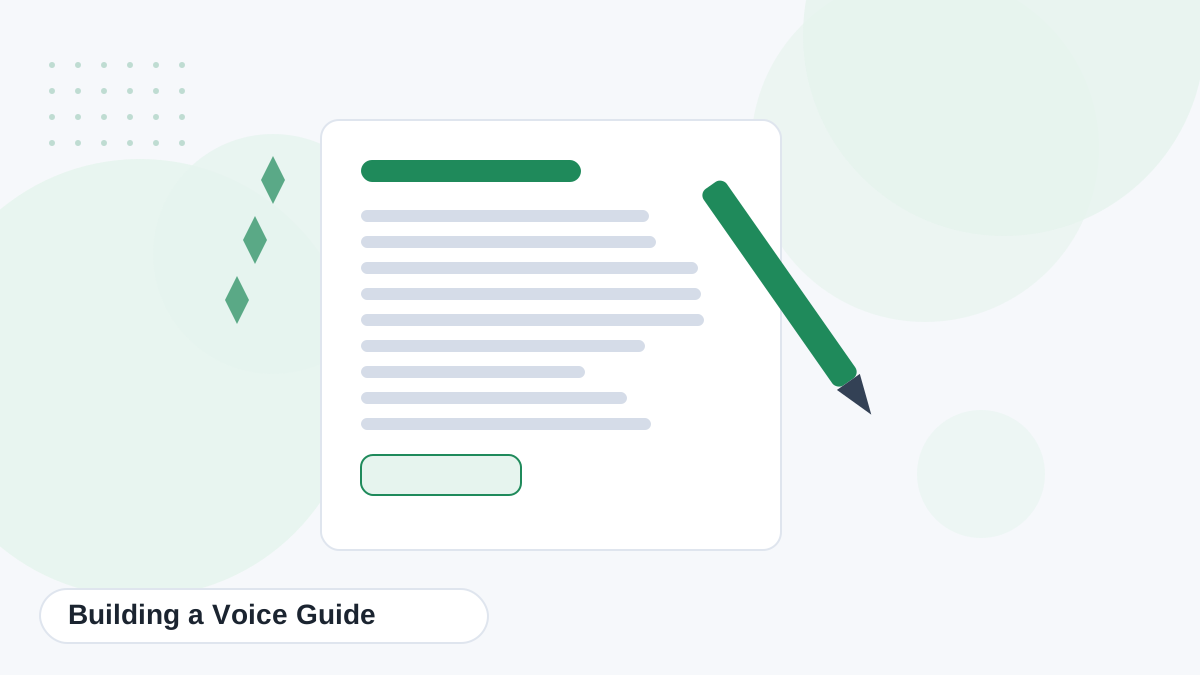
A short voice guide makes humanising faster and more consistent, especially when several people edit AI drafts. It can fit on one page:
- Who we are: a one-line description of your publication.
- Who we write for: your typical reader and what they already know.
- How we sound: for example friendly, direct, practical, no hype.
- Words we use: preferred terms and phrases.
- Words we avoid: jargon, clichés and overused AI phrases.
- How we recommend: clear verdicts with reasons.
Load the same guide into your AI writer's brand settings so drafts start closer to the finish line.
Revisit the guide every few months as your publication evolves, and add examples of strong edits so new editors can see exactly what good looks like.
Over time, the guide becomes one of the most valuable documents your team owns.
Start From Drafts That Need Less Fixing
Koala drafts from live research with your brand settings built in, so editing focuses on adding insight rather than rewriting. Try the free plan.
Try Koala Free