Search Intent - How to Identify It and Brief Your AI Writer to Match (2026)
Search intent is the reason behind a search. Get it wrong and even a brilliant article won't rank. Get it right and AI drafts start much closer to the finish line.
Search intent is what the searcher actually wants: to learn, compare, buy or reach a specific site. The fastest way to find it is to look at what already ranks. Match the dominant format, cover what top results cover, then add what they miss. Briefing your AI writer with the intent and format is the single biggest improvement you can make to a draft.
What Search Intent Is
Every search has a goal behind it. Someone typing "how to descale a kettle" wants instructions. Someone typing "best kettle for limescale" wants recommendations. Someone typing "Brand X kettle discount" is close to buying.
Search engines try to show results that satisfy that goal. If your page answers a different question from the one the searcher is asking, it won't rank well, no matter how well it's written.
The Four Main Types
| Type | Goal | Example queries | Typical format |
|---|---|---|---|
| Informational | Learn or understand | "what is topical authority", "how to cluster keywords" | Guides, explainers, tutorials |
| Commercial | Compare before deciding | "best AI SEO writer", "Koala vs Jasper" | Roundups, comparisons, reviews |
| Transactional | Take an action or buy | "Koala AI pricing", "buy standing desk" | Product, pricing or sign-up pages |
| Navigational | Reach a specific site | "Koala login", "Search Console" | Homepages, login pages |
Many queries blend types. "Koala AI review" is commercial, but searchers also want pricing and feature information. Local intent ("near me", city names) is another important layer for service businesses.
How to Read Intent From the Results Page
Keyword tools label intent, but the most reliable method is looking at the search results yourself.
- Search the keyword in a private window.
- Note the page types in the top results: guides, listicles, product pages, videos, forums.
- Note the angle: beginner, advanced, budget, a specific year or audience.
- Check search features: AI summaries, "People also ask", shopping results, local maps.
- Identify the dominant pattern that most results share.
- Look for gaps that none of the results cover well.
If most top results are listicles, a long narrative guide will struggle. If they're step-by-step tutorials, a product roundup won't fit.
Keyword Clues That Signal Intent
Informational Clues
what, how, why, guide, tutorial, examples, ideas
Commercial Clues
best, top, review, vs, alternatives, compared
Transactional Clues
price, pricing, buy, discount, coupon, sign up, free trial
Navigational Clues
brand names, login, app, dashboard, support
Modifiers give you a first guess, but always confirm with the results page. Some keywords surprise you.
Why Intent Matters More With AI Writers
AI writers produce whatever you ask for. If you request a "blog post about standing desks" when the keyword needs a roundup of the best models, you'll get a well-written article in the wrong format.
Tools that analyse live search results before writing, like Koala, pick up much of the intent automatically because they see what ranks. You still get better results by choosing the right article type and adding intent notes to your instructions.
Koala reads the live results for your keyword before drafting, so outlines start aligned with intent. Try the free plan.
Try Koala FreeBriefing Your AI Writer for Intent
A short intent brief makes a big difference. Include:
- The intent type and the reader's goal in one sentence.
- The format the results reward: guide, listicle, comparison, review.
- The audience level: beginner, intermediate or expert.
- Must-cover subtopics from the top results.
- The gap you'll fill that others miss.
- The next step you want readers to take.
For example: "Commercial intent. Readers want to choose an AI writer for affiliate sites. Format: ranked roundup with a clear top pick. Audience: niche site owners with some SEO knowledge. Cover pricing, Amazon features and bulk writing. Gap: honest notes on who shouldn't pick each tool."
Our SEO content brief guide turns this into a reusable template.
Fixing Intent Mismatch on Existing Pages
If a page gets impressions but stays stuck on page two or three, intent mismatch is a common cause. Signs include:
- Top results use a different format from your page.
- Your page targets a broader or narrower question than the results.
- Searchers want a quick answer, but your page buries it.
- The page tries to serve two different intents at once.
The fix is usually restructuring rather than adding words: change the format, move the answer up, or split a page that serves two intents. See updating old posts with AI.
Intent and Keyword Clustering
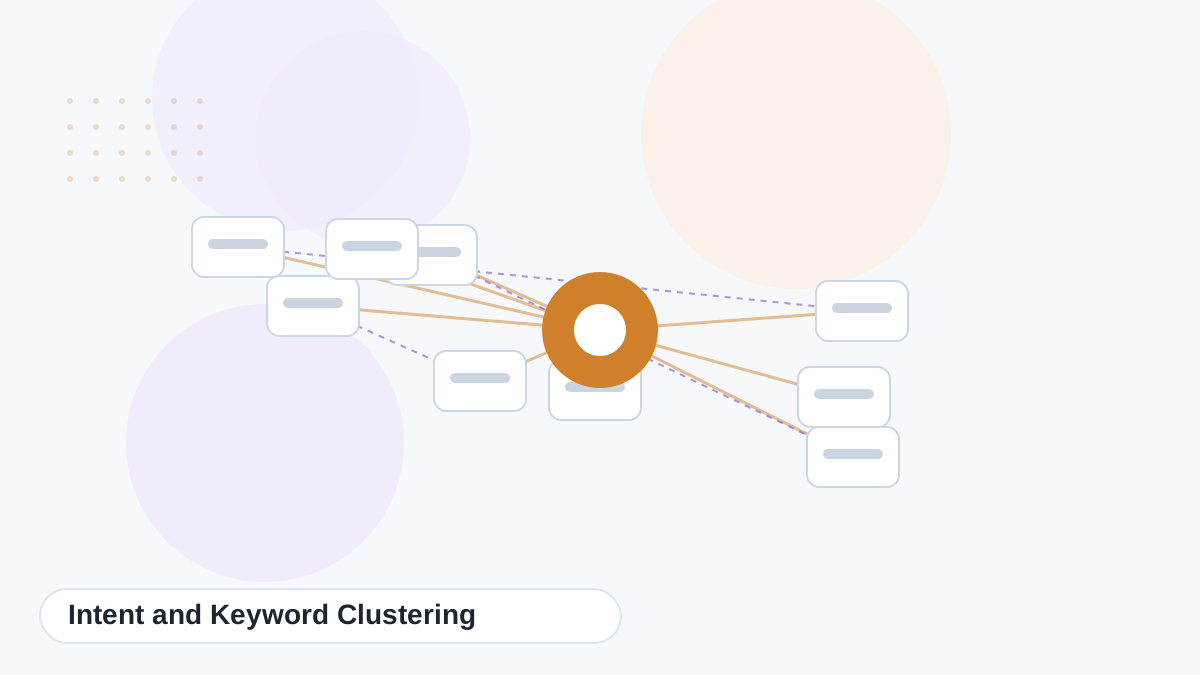
Intent decides which keywords share a page. Two keywords with similar wording but different intent, such as "keyword clustering tools" (commercial) and "how to cluster keywords" (informational), usually need separate pages. Keywords with the same intent and overlapping results can share one.
Our keyword clustering guide explains how to group by intent and results overlap.
Intent in the Age of AI Answers
AI summaries now answer many simple informational queries directly. That shifts value towards queries where people need more: comparisons, decisions, step-by-step help and specific situations. It also rewards pages that answer the core question clearly and early, then go deeper.
Structuring content with clear headings and direct answers helps both traditional rankings and AI citations. See generative engine optimisation.
Intent Examples Across a Buyer Journey
| Stage | Query | Best page |
|---|---|---|
| Problem | "why does a blog get no traffic" | Diagnostic guide |
| Learning | "how to write SEO articles" | Step-by-step tutorial |
| Comparing | "best AI SEO writer" | Ranked roundup |
| Deciding | "Koala AI review" | In-depth review |
| Buying | "Koala AI pricing" | Pricing explainer |
| Using | "how to use KoalaWriter" | Tutorial |
Each stage needs a different page, and the pages link to each other so readers can move naturally to the next step.
Mixed and Shifting Intent
Some results pages show a mix of formats, such as a few guides, a few listicles and a product page. That usually means searchers want different things. In that case, target the most common format, or the one that best fits your business, and make sure the page answers the core question quickly.
Intent can also shift over time. A query that once showed guides might start showing product pages as a market matures. Rechecking results for your most important keywords every few months helps you spot those changes before rankings slip.
When you spot a shift, update the page to match the new dominant format rather than starting a new one. Keeping the same URL preserves any links and history the page has already earned, while the refreshed format gives it a better chance of matching what searchers now expect.
Small format changes like this often move a page further than adding more words ever would.
Start Every Draft Aligned With Intent
Use Koala's free plan to generate an outline from live search results, then check it against the intent you've identified before drafting.
Try Koala Free