KoalaLinks - How Koala Adds Internal Links to Old and New Content (2026)
Looking for the best offer for Koala AI?
KoalaLinks adds contextual internal links in bulk across your existing content. It's available from the Professional plan, which supports up to 50 sites. New KoalaWriter articles also get automatic internal links once you add your domain.
Why Internal Links Matter
Internal links help search engines discover new pages, understand how topics relate, and judge which pages matter most. They also help readers find the next useful page, which keeps them on your site longer.
The problem is maintenance. Every new article should link to related older ones, and older articles should link back. On a site with hundreds of posts, doing that by hand becomes a constant chore that often gets skipped.
KoalaLinks automates much of that work, and Koala reports placing more than 25 million internal links across its users' sites.
Two Ways Koala Adds Internal Links
| Feature | What it does | Available on |
|---|---|---|
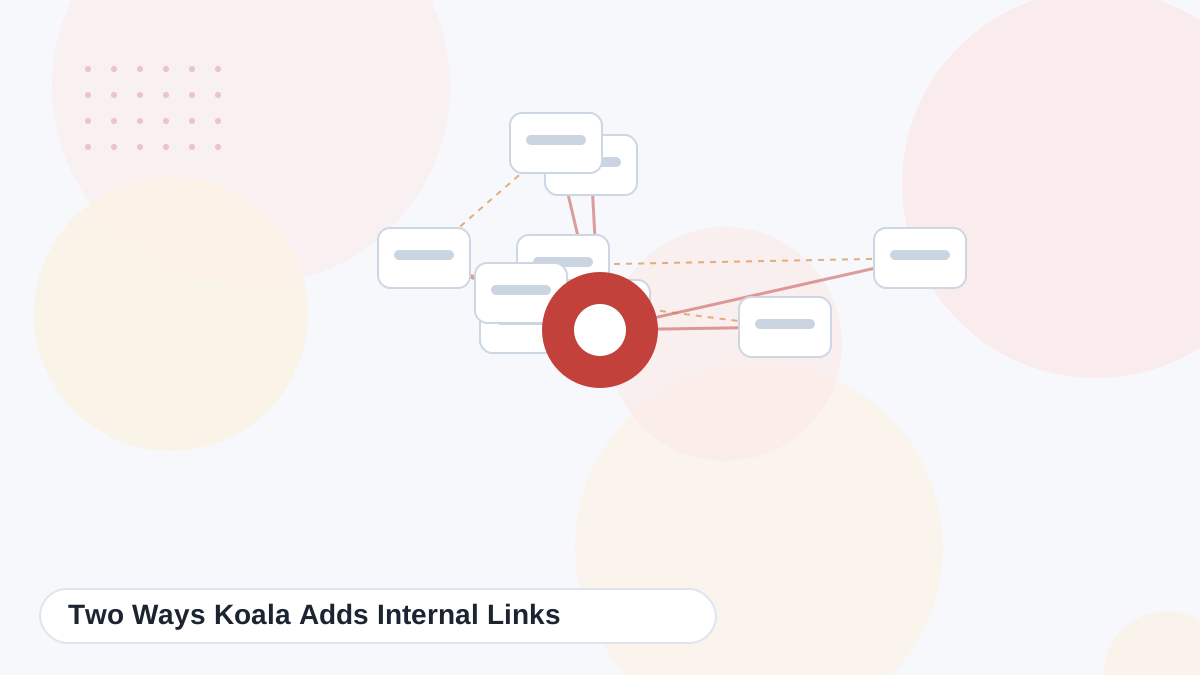
| Automatic linking in KoalaWriter | Adds links from new articles to relevant pages on your site as it writes | Once your domain is added |
| KoalaLinks | Adds links in bulk across existing content | Professional and above (up to 50 sites on Professional) |
Together, they cover both directions: new pages linking out to old ones, and old pages being updated to link to related content.
How KoalaLinks Works
- Add your domain. Koala indexes your site to understand what each page covers.
- Bind it to a brand. In Brand DNA, each brand can use its own KoalaLinks domain.
- Run linking. KoalaLinks finds relevant spots in existing content and adds contextual links.
- Review the changes. Check that anchors read naturally and point to the right pages.
Koala added non-English internal linking in October 2026, so multilingual sites can use the feature too.
KoalaLinks starts on Professional. New articles on any plan get automatic internal links once your domain is added.
Try Koala FreeBest Practices for Automated Linking
Automation saves time, but good internal linking still follows a few principles.
- Relevance first: links should point to the page that genuinely answers the next question.
- Natural anchors: vary anchor text and keep it descriptive rather than repeating exact keywords.
- Don't overload: a handful of strong links beats dozens of weak ones.
- Prioritise key pages: make sure money pages and hubs receive links from related content.
- Fix orphans: every important page should have at least a few internal links pointing to it.
Our internal linking guide explains how to plan link structure across a whole site.
KoalaLinks for Agencies and Multi-Site Owners
Professional supports KoalaLinks on up to 50 sites, which is generous for portfolio owners. Combined with per-brand bindings in Brand DNA, each client's articles link only within their own site.
That prevents a common mistake in multi-site setups: accidentally linking one client's article to another client's domain.
Schema Management
Koala's Growth Agent added schema management alongside KoalaLinks features in 2026, helping you add structured data to pages. Structured data doesn't replace good content, but it helps search engines understand page types such as articles and FAQs. See our schema guide.
What KoalaLinks Won't Do
KoalaLinks adds links within content you already have. It won't decide your site architecture, create hub pages or fix pages that shouldn't exist. If two articles target the same query, linking them together won't resolve the overlap. Consolidation will.
Use KoalaLinks to maintain a good structure, not to replace planning it.
Planning Link Structure Before Automating It
Automated linking works best on a site with a clear structure. Before running KoalaLinks across your content, spend a few minutes mapping your main topics.
- List your pillar pages: the main guides or category pages for each topic.
- Group supporting posts under each pillar.
- Identify money pages such as reviews, comparisons or service pages.
- Check for overlaps: merge pages that target the same query.
- Then run KoalaLinks so links reinforce that structure.
This planning step makes automated links more relevant, because the pages they point to are clearly defined.
How to Review Automated Links
A quick review after each run keeps quality high. Spot-check a sample of updated pages and ask three questions: does the anchor text read naturally, does the link point to the most relevant page, and is the page overloaded with links?
If you see recurring issues, such as links to a page you're planning to remove, fix the underlying page first and run linking again.
Measuring the Impact
Internal linking improvements often show up as faster indexing of new pages and gradual ranking gains for pages that receive more relevant links. Watch Search Console for newly linked pages gaining impressions over the following weeks.
Our guide to measuring content performance explains which metrics to watch.
Keep Your Site Connected Automatically
Start on Koala's free plan, then use KoalaLinks on Professional to link your existing content without hours of manual editing.
Try Koala Free