Scaled Content Abuse - How to Use AI at Scale Without Breaking Google's Rules (2026)
Google's scaled content abuse policy is the rule AI publishers worry about most. The good news: it targets intent and value, not the tools you use.
Scaled content abuse means producing many pages mainly to manipulate search rankings rather than help people. It applies whether content comes from AI, humans or both. Publishing lots of AI-assisted content isn't automatically a violation; publishing lots of low-value, unreviewed pages aimed at ranking tricks is. Plan, review and add value, and volume becomes far less risky.
What the Policy Says
Google introduced its scaled content abuse policy in March 2024, alongside new policies on expired domain abuse and site reputation abuse. It replaced an older policy focused specifically on automatically generated content.
The definition centres on purpose: many pages generated primarily to manipulate search rankings and not to help users. Google says the policy applies no matter how the content is produced, whether through automation, human effort or a combination.
That last point matters. The policy isn't anti-AI. A content farm paying people to write thousands of thin pages is as much a target as one using a language model.
What Counts as Scaled Content Abuse
Google's documentation describes several patterns. In plain terms, they include:
- Using automation, including AI, to generate many pages that add little value for readers.
- Scraping content from other sites and republishing it, with or without light changes.
- Stitching together content from different sources without adding anything original.
- Creating many sites or pages that hide how little value the content offers.
- Producing pages full of keywords that make little sense to a reader.
The common thread is low value at volume, produced to capture search traffic rather than serve the people who land on the page.
What Doesn't Count
Scale on its own isn't the problem. Plenty of legitimate sites publish huge numbers of pages: product catalogues, property listings, sports results, recipe sites and large publications.
Using AI on its own isn't the problem either. Google's guidance on AI content says it rewards helpful, reliable content regardless of how it's produced, and that appropriate use of AI isn't against its guidelines.
Allowed
AI-assisted articles that are accurate, reviewed and useful.
Allowed
Large sites with many genuinely distinct, helpful pages.
Risky
Hundreds of unreviewed AI pages targeting keyword variations.
Risky
Rewritten competitor content with nothing added.
Warning Signs on Your Own Site
Ask these questions about your content program. The more "yes" answers, the higher your risk.
| Question | Why it matters |
|---|---|
| Are you publishing faster than anyone can review? | Unreviewed volume is the clearest risk pattern |
| Do many pages target near-identical keywords? | Suggests pages built for ranking, not readers |
| Would a reader learn anything new from a typical page? | Low added value is central to the policy |
| Is content mostly rewritten from top results? | Stitched or spun content is a named pattern |
| Are pages off-topic for your site? | Unrelated volume looks like traffic capture |
| Would you be comfortable showing the process to Google? | A useful gut check on intent |
A Safer Workflow for AI at Scale
- Plan before you generate. Build a topic map with one page per distinct search intent. Our keyword clustering guide helps.
- Use research-based drafts. Tools that analyse live results, like Koala, produce more accurate starting points than blank prompts.
- Add real value to every page. Opinions, examples, original images or data.
- Review before publishing. Set a pace your team can actually check.
- Link pages into clusters. Coherent structure shows purpose.
- Prune and improve. Merge or update pages that never earn impressions.
Koala's research-based drafts give you a stronger starting point for reviewed, helpful content. Try the free plan.
Try Koala FreeHow Bulk and Autopilot Features Fit In
Many AI writers, including Koala, offer bulk generation and scheduled publishing. These features are tools, not violations. The question is how you use them.
We'd use bulk generation to draft a planned cluster, then review in batches before anything goes live. With Koala's Autopilot, we'd start with a draft-and-review setup rather than automatic publishing, and only consider auto-publishing for well-tested, low-risk formats once quality is proven. Our Autopilot guide covers safer settings, and bulk writing explains batch workflows.
What Happens If a Site Is Affected
Google can act on spam through automated systems or manual actions. A manual action appears in Search Console's Manual Actions report with a description of the issue. Algorithmic effects show up as drops in visibility, often around core or spam updates.
Recovery generally means removing or substantially improving low-value content, then, for manual actions, submitting a reconsideration request. It takes time, which is why prevention is far easier than cure. If your traffic has already dropped, our guide to AI content traffic drops walks through diagnosis.
Examples: Safe vs Risky Scaling
| Approach | Risk level | Why |
|---|---|---|
| 50 planned cluster articles, reviewed over two months | Low | Distinct intents, human review, coherent structure |
| Product pages for a real catalogue with unique details | Low | Each page serves a distinct product |
| 500 city pages with only the place name changed | High | Near-duplicate pages built for rankings |
| 1,000 auto-published AI posts on unrelated trending topics | High | Unreviewed, off-topic volume |
| Rewritten versions of competitors' top articles | High | Little added value; stitched or spun content |
The difference isn't volume alone. It's whether each page has a genuine reason to exist and has been checked by someone who cares about the reader.
The Bigger Picture
Search engines are getting better at judging whole sites, not just individual pages. A site where most pages are thin or repetitive can see the whole domain lose visibility, not just the weakest pages.
That makes quality a site-wide strategy rather than a page-by-page fix. Fewer, better pages that genuinely cover a topic tend to outperform sprawling sites built on volume alone. Our topical authority guide explains how to build coverage the right way.
Building a Review Process That Scales
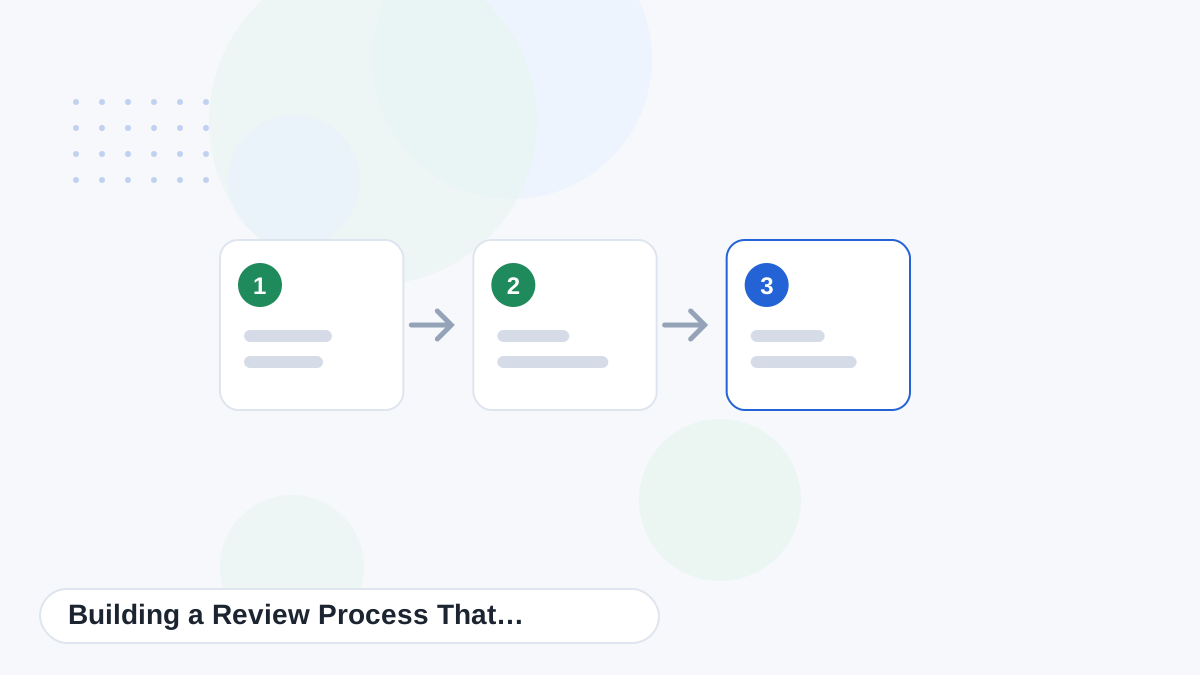
The biggest practical safeguard is a review process your team can sustain. A few habits make that possible even at higher volumes.
- Batch by topic so reviewers stay in context.
- Use a short checklist covering accuracy, added value, links and intent match.
- Set a publishing cap that matches review capacity, not drafting speed.
- Track problem patterns and fix them in your prompts or settings.
- Audit quarterly to merge, improve or remove pages that never perform.
If drafting outpaces review, slow publishing down rather than skipping the check.
Teams that follow these habits rarely need to worry about the policy at all, because every page they publish has a clear purpose and has been checked by someone who understands the reader.
If you are unsure whether a page should exist, ask whether you would still publish it if search engines did not exist. If the answer is no, it probably needs more value or should be merged.
Scale Content the Sustainable Way
Use Koala's free plan to draft one planned cluster article, review it properly, and build a workflow you'd be comfortable scaling.
Try Koala Free